With the rapid development of artificial intelligence (AI) technology, the number of data centers has surged, driving an increasing demand for water resources—primarily for cooling systems and power supply. According to the latest estimates from the Organisation for Economic Co-operation and Development (OECD), global AI industry water consumption will reach 6.6 billion cubic meters by 2027.
A report published on November 20 by the World Economic Forum website notes that implementing circular water management strategies can reduce data center water usage by 75%, which is crucial for protecting community freshwater resources. These approaches include adopting advanced technologies such as liquid cooling and closed-loop cooling to optimize water utilization.
Data Centers Become Major Water Consumers
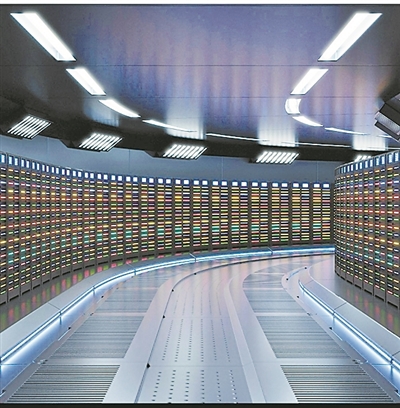
From daily social entertainment to complex AI computations, data centers have always been the backbone of the digital world. However, their operation comes with a high environmental cost, consuming not only large amounts of materials and energy but also precious water resources. The massive data processing generates enormous heat, which must be managed through cooling equipment to maintain normal operation.
Data center water usage is primarily concentrated in two areas: cooling systems, including chillers, cooling towers, and liquid cooling devices; and power generation, such as steam-based electricity production, which requires significant water.
In July 2023, a joint study by scientists from the University of California, Riverside and the University of Texas at Arlington revealed that training the GPT-3 model at a Microsoft data center in the United States directly consumed 700,000 liters of purified water—enough to meet the daily water needs of 20,000 people. Moreover, for every 20 to 50 queries answered, ChatGPT "drinks" a 500-milliliter bottle of drinking water.
Data shows that a 1-megawatt data center requires 25.5 million liters of water annually for cooling, equivalent to the daily water consumption of 300,000 people. Meanwhile, a medium-sized 15-megawatt data center consumes as much water daily as three hospitals or two golf courses use in a year.
This严峻形势 underscores the urgency and significant potential of implementing circular water management strategies.
Smart Management Combined with Advanced Technology Achieves Significant Water Savings
Water resource optimization focuses on continuously monitoring and adjusting water usage through intelligent water management systems, while adopting innovative and water-efficient cooling methods to minimize actual water consumption in data centers, achieving precise water conservation.
An intelligent water management system equipped with real-time sensors can dynamically regulate water supply based on cooling demands, combined with optimization algorithms to pre-control the water cooling process, achieving a 25% reduction in water usage. This enables advanced technologies such as liquid cooling and closed-loop cooling to excel.
Liquid cooling technology uses coolant as a thermal conductive medium to directly circulate and remove heat generated by core components such as central processing units and graphics processing units. Compared to traditional methods, this technology can save 91% of water, reduce energy consumption by 50%, and decrease space usage by 85%.
Closed-loop cooling systems achieve efficient heat dissipation through a sealed circulation of cooling media (such as water or specialized liquids), widely applied in fields like industrial manufacturing, communication support, and data centers.
The most innovative is "direct-to-chip cooling," which uses coolant or cold plates to directly contact the chip surface for heat dissipation, effectively avoiding overheating and water waste. This technology is particularly suitable for water-scarce regions, achieving water savings of 20% to 90% and reducing electricity demand by 18%.
Currently, Microsoft has deployed closed-loop liquid cooling systems; Carrier is investing in direct-to-chip cooling technology; and Ecolab has introduced 3D TRASAR™ technology, which monitors coolant status in real time to ensure stable server operation.
Industry analysis shows that the global data center cooling market is expected to exceed $200 billion by 2029, with liquid cooling technology achieving a compound annual growth rate of up to 39%.
Water Replenishment Solutions for a Positive Water Cycle
In addition to water conservation, data centers can improve local water conditions through water replenishment measures. While water resource optimization reduces water usage, replenishment measures focus on restoring water sources by enhancing water supply and quality, ensuring clean water access for local communities.
Key strategies include wastewater treatment and reuse, utilizing reclaimed water for irrigation and industrial processes; replenishing groundwater reservoirs; and conserving water through efficient irrigation methods.
Data centers adopting wastewater treatment and reuse technologies can reduce freshwater dependency by 50%. For example, Amazon Web Services is advancing multiple water replenishment initiatives, including repairing pipelines, harvesting rainwater, and using reclaimed water to cool servers.
In Georgia, USA, Google meets its data center cooling needs by recycling municipal wastewater, treating non-evaporated water before returning it to natural waterways.
Microsoft has set a "water positive" goal for 2030, planning to achieve it through multiple approaches including water conservation, replenishing more water than consumed, improving water supply services, and participating in policy development. Its smart irrigation project in Spain's Ebro River basin has saved 115,000 cubic meters of water, benefiting 740 hectares of farmland and over 710 farming households.
Although significant progress has been made in recycled water management, the continued growth in demand for digital services necessitates a more ambitious strategic framework—systematically integrating data-driven water conservation measures into digital infrastructure design. This is not only a requirement for environmental compliance but also a strategic necessity for building a sustainable digital ecosystem.